Direct answer
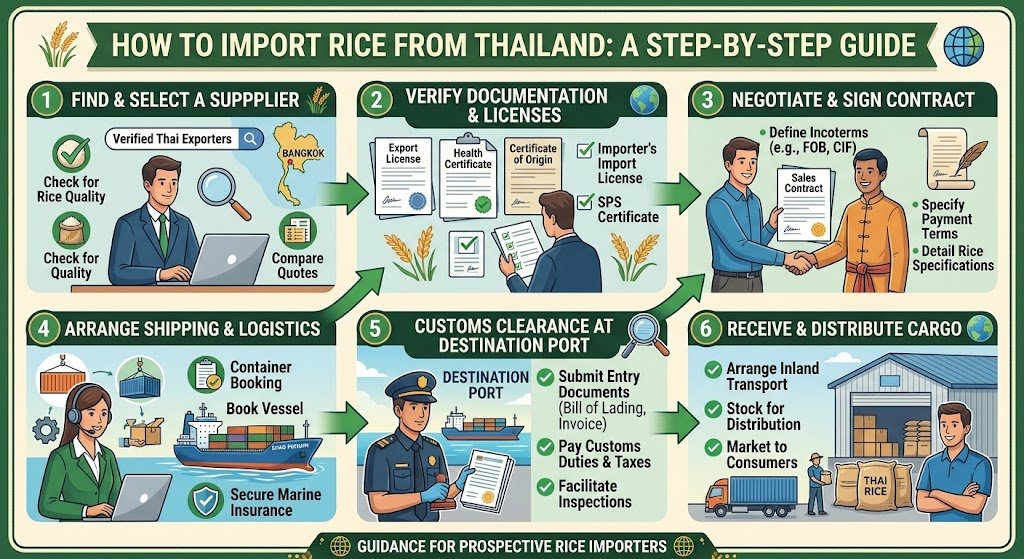
Importing Thai rice normally requires two documents issued by Thai government bodies: a certificate of origin from the Department of Foreign Trade (including Form D for ASEAN or Form E for China where a trade agreement applies) and a phytosanitary certificate from the Department of Agriculture. The exporter and third parties add the commercial invoice, packing list, bill of lading, fumigation certificate and a certificate of quality and weight. Depending on the destination, health, non-GMO, organic or Halal certificates may also be required.
Key takeaways
- Government documents: certificate of origin (DFT) and phytosanitary certificate (Department of Agriculture).
- Form D (ASEAN) and Form E (ASEAN-China) certificates can reduce import duty where the agreement applies.
- Thai Hom Mali shipments are also inspected by the Department of Foreign Trade.
- Under a letter of credit, documents must match the credit exactly or payment can be delayed.
- Confirm your destination's document list before you sign the contract.
Documents issued by Thai authorities
Certificate of origin: issued by the Department of Foreign Trade (DFT) of the Ministry of Commerce, confirming the rice is of Thai origin. Where a free trade agreement applies, a preferential form is used, such as Form D for trade within ASEAN or Form E for trade under the ASEAN-China agreement, which can reduce or remove import duty.
Phytosanitary certificate: issued by Thailand's Department of Agriculture, confirming the rice meets the plant health requirements of the importing country.
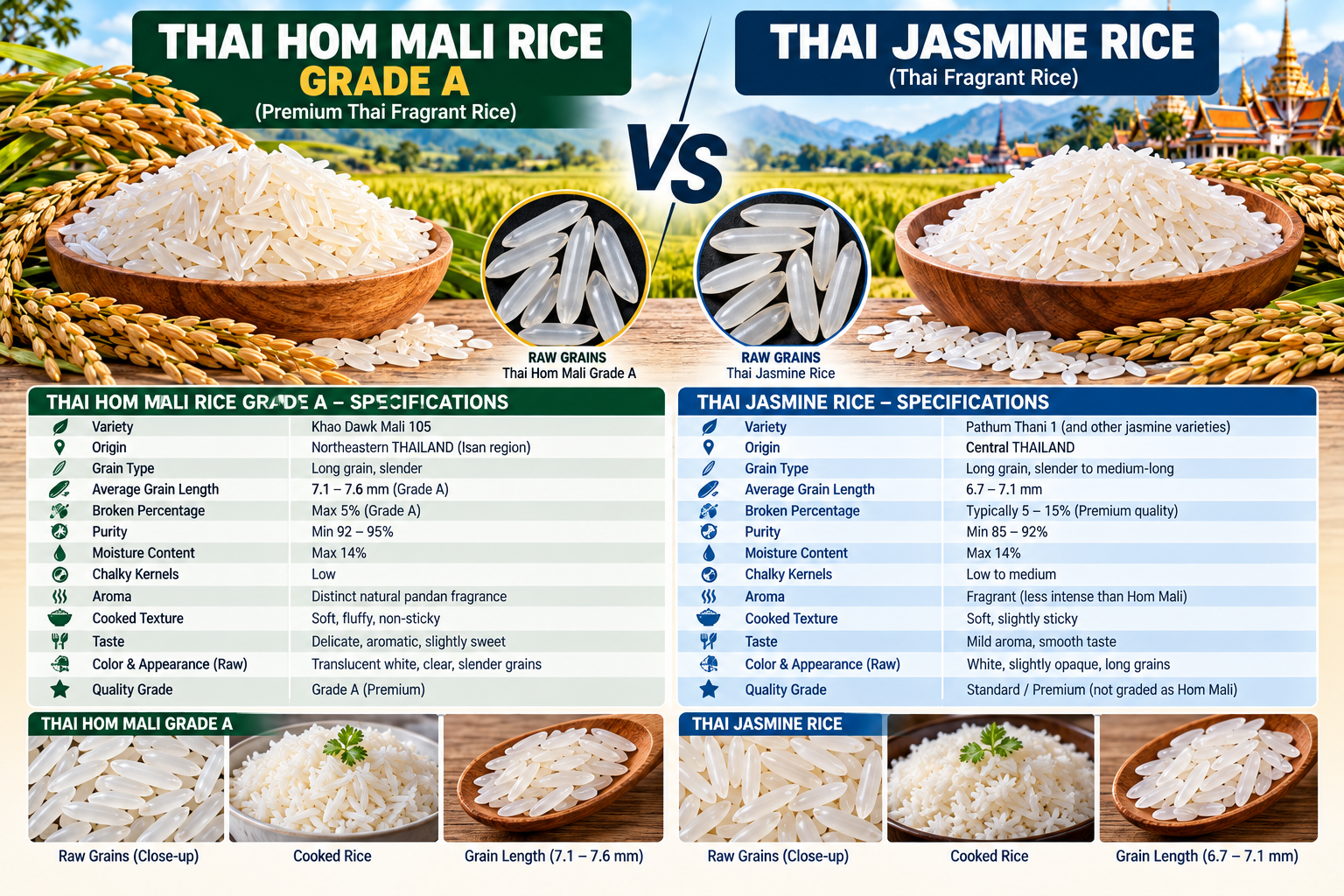
Hom Mali inspection: for Thai Hom Mali rice, the DFT samples and tests every export shipment against the official standard. Where required for EU and UK import licensing, the DFT also issues rice export certificates.
Documents from the exporter and third parties
- Commercial invoice: product, quantity, price and Incoterm.
- Packing list: bags, net and gross weights, container and seal numbers.
- Bill of lading: issued by the shipping line; proof of shipment and title to the goods.
- Fumigation certificate: issued by a licensed fumigation company after the loaded containers are treated.
- Certificate of quality and weight: issued by an independent surveyor such as SGS, Intertek or Bureau Veritas.
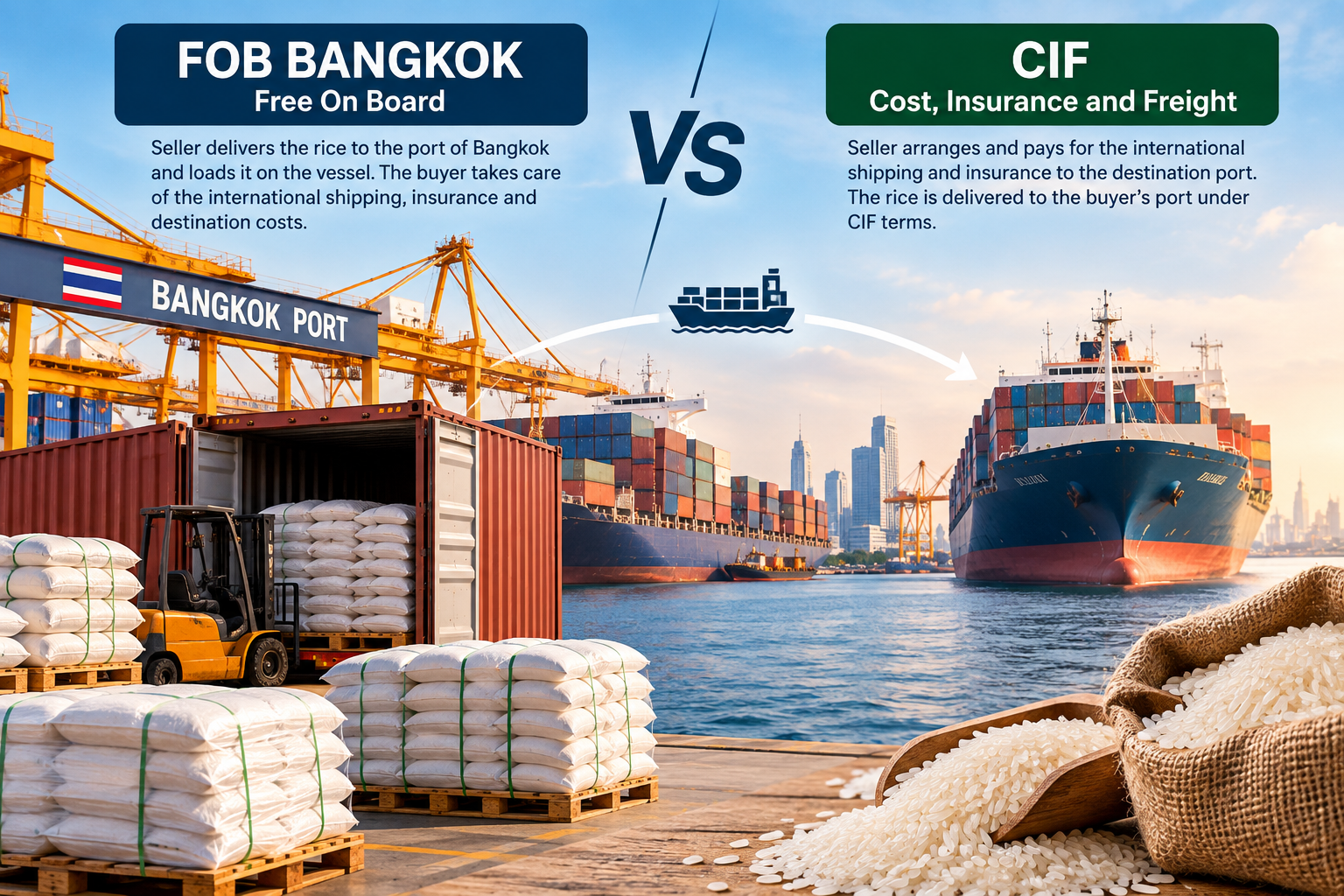
- Insurance certificate: for CIF shipments.
What the certificate of quality and weight typically confirms
| Parameter | Typical requirement |
|---|---|
| Moisture | 14% maximum |
| Broken kernels | As contracted, e.g. 5% or 25% |
| Whole kernels, chalky and damaged kernels | Within the grade limits in the contract |
| Net weight and bag count | As per packing list |
| Packaging and marking | Bag type, size and markings as contracted |
| Shelf life / crop year | Crop year stated where contracted |
| Minimum order quantity | Agreed per order; a 20ft full container holds about 25 MT |
The surveyor samples the lot before loading; exact parameters follow your contract and letter of credit.
Market-specific certificates
Some markets and buyers need more. US-bound food shipments need FDA prior notice from the importer, referencing a registered food facility. EU buyers may ask for laboratory reports on pesticide residues and contaminants. Other certificates, such as health, non-GMO, organic or Halal certificates, are issued by the relevant authorities or certification bodies when the destination or the buyer requires them.
Getting documents right under a letter of credit
When you pay by letter of credit, the bank checks every document against the credit. Small differences, such as a product description, quantity or port name that does not match, can cause a discrepancy and delay payment and cargo release. Agree the exact document list, descriptions and number of originals in the contract, and copy them precisely into the credit. See our export and logistics page for our full document list.
Frequently asked questions
Which documents are needed to import rice from Thailand?
Typically a commercial invoice, packing list, bill of lading, certificate of origin, phytosanitary certificate, fumigation certificate and certificate of quality and weight, plus any market-specific certificates such as health, organic or Halal.
What is Form D for Thai rice?
Form D is the preferential certificate of origin for trade between ASEAN countries. Issued by Thailand's Department of Foreign Trade, it can reduce or remove import duty on Thai rice in other ASEAN member states.
Who issues the phytosanitary certificate for Thai rice?
Thailand's Department of Agriculture issues the phytosanitary certificate, confirming that the rice meets the plant health requirements of the importing country.
Sources and further reading
- Department of Foreign Trade, Ministry of Commerce, Thailand
- Department of Agriculture, Thailand
- International Chamber of Commerce: UCP 600
- US Food and Drug Administration: prior notice of imported food
This guide is for general information. Regulations and market conditions change, so confirm current requirements with the relevant authorities and your advisers.
Sourcing rice from Thailand?
Tell us what rice you need, the quantity required, and your destination. Our export team will respond with the relevant information and quotation.