Key takeaways
- Check your own country's import rules first: permits, food registration, labelling and duties vary by market.
- Define the rice precisely: variety, broken percentage, crop year, packing and trade term.
- Verify the exporter before paying anything. Thai rice exports require a licence from the Department of Foreign Trade.
- Put everything in a written contract, use secure payment methods and appoint an independent inspection company.
- Allow a few weeks for milling, packing and loading, plus about 3 to 55 days at sea, depending on your region.
Step 1: Check your country's import requirements
Before you contact any exporter, confirm what your own country requires. Import clearance is always the buyer's responsibility under FOB, CFR and CIF terms, and rules vary widely between markets. Typical requirements include an import permit or licence, registration as a food importer, labelling in the local language, and payment of import duties and taxes.
Some examples: in the United States, the FDA requires prior notice before each food shipment arrives, and the foreign food facility must be registered with the FDA. In the European Union, rice must meet EU limits for pesticide residues and contaminants such as inorganic arsenic. Many West African markets require import permits and specific documents at the port of entry. Your customs broker or national food authority can confirm the current rules.
Step 2: Decide exactly which rice you need
Rice is not a single product. Price and suitability depend on the variety, the grade and the packing. Before requesting quotes, decide on:
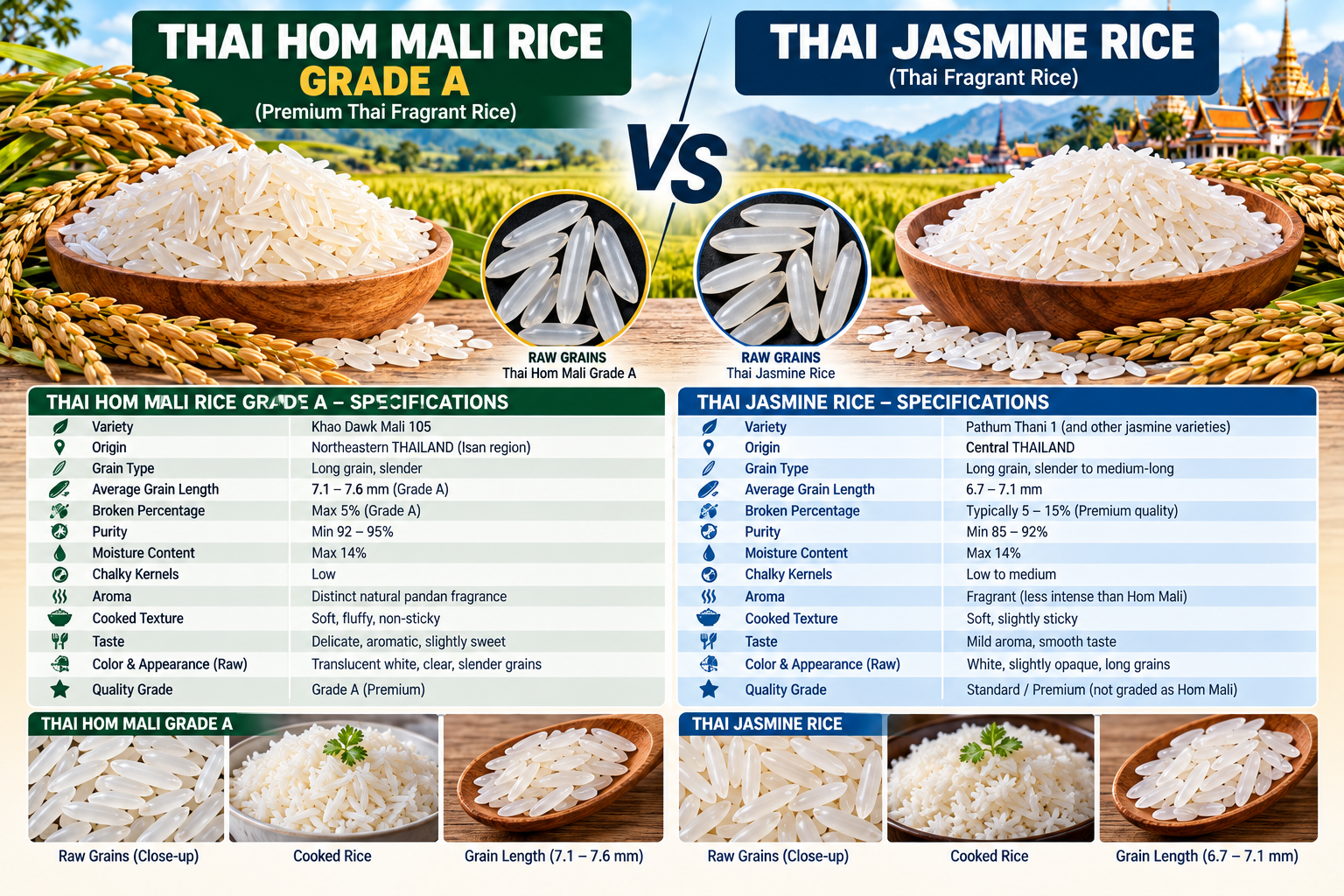
- Variety: for example Thai Hom Mali, fragrant rice, long grain white, parboiled, glutinous or broken rice. See our guide to Hom Mali Grade A vs Thai jasmine specifications.
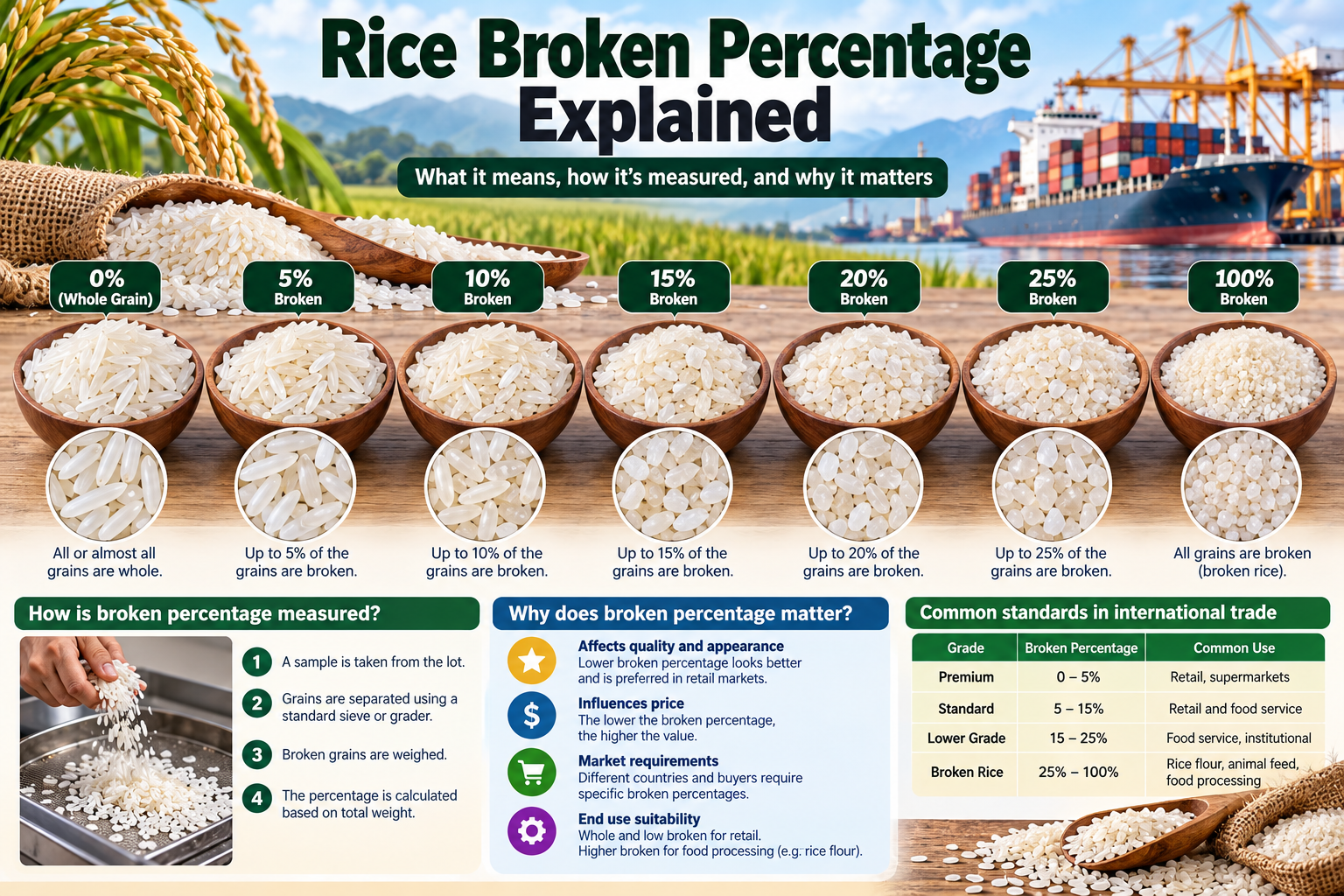
- Grade: the percentage of broken kernels, such as 5% or 25%. See rice broken percentage explained.
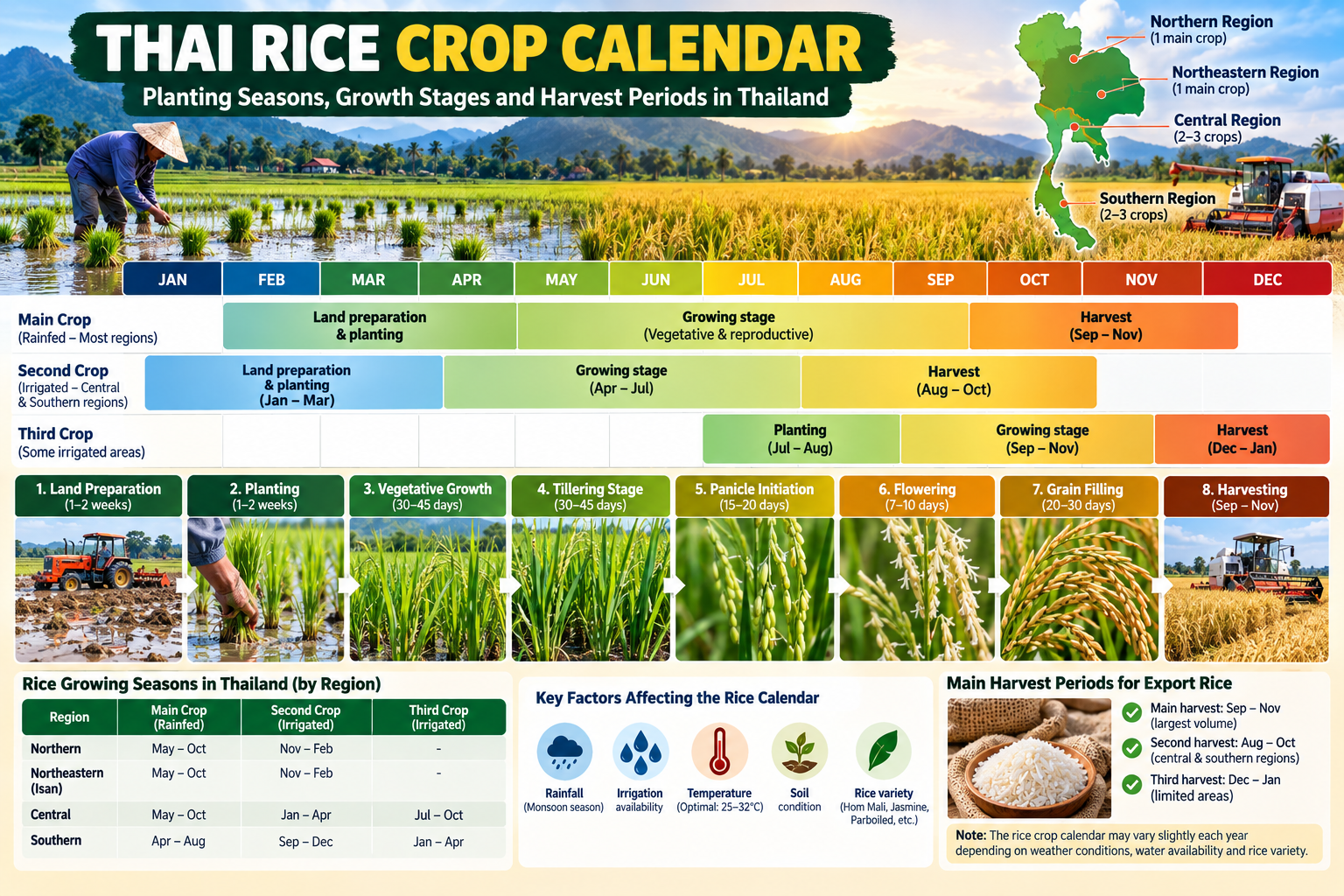
- Crop year: new crop or old crop, which changes aroma and cooking behaviour.
- Packing: bag size, bag type and whether you need your own private label.
- Quantity and schedule: a single shipment or regular deliveries.
Step 3: Find and verify a Thai rice exporter
Thailand treats rice as a controlled export. Exporters must hold a rice export licence from the Department of Foreign Trade (DFT) of the Ministry of Commerce, and Thai Hom Mali rice is sampled and tested by the DFT for every export shipment. A genuine exporter will be able to explain this process and provide supporting documents.
Before paying anything, check that the company is real: a registered Thai company with a verifiable address, a working local phone number, a company email on its own domain, a website with a consistent history, and certificates you can verify with the issuing body. A video call, a visit or a local agent adds further confidence.
Warning signs of rice trading fraud include prices far below the market, pressure to decide quickly, requests to pay a personal or third-party bank account, last-minute changes to bank details, reluctance to accept independent inspection, and product photos that also appear on other companies' websites. A genuine supplier will welcome your checks.
Step 4: Request quotations and samples
Send each exporter the same clear inquiry: rice type and grade, quantity, packing, destination port and preferred trade term. Comparing like with like is the only way to compare prices fairly.
A professional quotation should state the specification, packing, price per metric ton, the Incoterm with the named port (for example FOB Laem Chabang or CIF Lagos), the shipment period and how long the offer is valid. Ask for samples so you can test cooking quality with your own customers before you commit to a container order. Read our guide to FOB, CFR and CIF shipping to decide which term suits you.
Typical ocean transit times from Thailand
| Destination region | Indicative transit |
|---|---|
| Southeast and East Asia | About 3 to 12 days |
| Middle East | About 15 to 25 days |
| North America, West Coast | About 20 to 30 days |
| Europe | About 30 to 40 days |
| West and Central Africa | About 35 to 55 days |
Indicative port-to-port times from Laem Chabang; actual times depend on the shipping line, transshipment and season.
Step 5: Agree a written sales contract
The contract protects both sides. It should cover at least:
- Product, variety and full specification (broken %, moisture, purity, crop year).
- Quantity, with any agreed tolerance, and the packing and bag markings.
- Price, currency and Incoterm under Incoterms 2020, with the named port.
- Latest shipment date and port of loading.
- Inspection company and what it will check.
- Documents to be provided, and the payment method and timing.
- How disputes will be resolved.
Step 6: Arrange secure payment
Payment terms are agreed between buyer and seller, but the method should protect both parties. A common option in international rice trade is an irrevocable letter of credit under the ICC's UCP 600 rules, where your bank pays only when the exporter presents documents that comply with the credit. Other methods, such as a deposit with the balance paid against shipping documents, are also used between established partners.
Whatever the method, pay only to a bank account in the exporter's registered company name, and confirm any change of bank details by phone with a person you already know. Email-based bank detail fraud is one of the most common ways importers lose money.
Step 7: Inspection, loading and shipping
Once payment is secured, the exporter mills, sorts and packs your rice. An independent surveyor such as SGS, Intertek or Bureau Veritas then samples the lot and checks quality and weight before loading. The containers are fumigated, sealed and cleared through Thai customs, and the shipping line issues the bill of lading.
Rice is heavy, so containers fill up by weight: a 20ft container holds about 25 metric tons (about 55,000 lbs) of rice in 25 or 50 kg bags.
Step 8: Documents, customs clearance and delivery
Your shipment should come with a commercial invoice, packing list, bill of lading, certificate of origin, phytosanitary certificate, fumigation certificate and a certificate of quality and weight, plus any extra certificates your market requires. Your customs broker uses these to clear the rice at the destination port.
Frequently asked questions
How long does it take to import rice from Thailand?
After the contract and payment are in place, milling, packing, inspection and loading usually take a few weeks. Ocean transit then takes from about 3 days to Southeast Asia up to about 55 days to West Africa, depending on the route.
Do I need an import licence to import rice?
It depends on your country. Many countries require an import permit, food importer registration or specific certificates for rice. Check with your customs broker or national food authority before you order.
How can I check that a Thai rice exporter is genuine?
Confirm the company's registration and address, speak to the team by phone or video, verify certificates with the issuing bodies, pay only to the company's own bank account, and use independent pre-shipment inspection. Thai rice exporters must be licensed by the Department of Foreign Trade.
What is the best trade term for a first rice import?
Many first-time importers choose CIF, because the exporter arranges the freight and basic insurance to the destination port. Buyers with their own freight contracts often prefer FOB.
Sources and further reading
- International Chamber of Commerce: Incoterms 2020 and UCP 600
- Department of Foreign Trade, Ministry of Commerce, Thailand: rice export regulations and standards
- US Food and Drug Administration: food facility registration and prior notice
- European Union: Regulation (EC) 396/2005 and Regulation (EU) 2023/915
This guide is for general information. Regulations and market conditions change, so confirm current requirements with the relevant authorities and your advisers.
Sourcing rice from Thailand?
Tell us what rice you need, the quantity required, and your destination. Our export team will respond with the relevant information and quotation.