Key takeaways
- Thailand has a main rainy-season crop and an irrigated off-season crop.
- The main crop is planted from about May to August and harvested from about November to December.
- Thai Hom Mali and most glutinous rice grow only in the main crop, so new crop Hom Mali arrives around the end of the year.
- The off-season crop, mostly in the irrigated central plains, is harvested from about February to April.
- Large harvests tend to push paddy prices down, while currency, competition and weather also move export prices.
Thailand's two rice seasons
Thai rice farming follows the monsoon. The main crop, also called the in-season or wet-season crop, is planted when the rains arrive, from about May to August, and harvested from about November to December, with some regions starting in October. It is the larger of the two crops.
The off-season crop, or dry-season crop, is grown mainly in the irrigated central plains, where water from dams and canals allows planting from about November to January. It takes roughly 90 to 120 days to grow and is harvested from about February to April. In the best-irrigated areas, farmers can grow two or three crops a year.
Thai rice crop calendar at a glance
| Crop | Jan | Feb | Mar | Apr | May | Jun | Jul | Aug | Sep | Oct | Nov | Dec |
|---|---|---|---|---|---|---|---|---|---|---|---|---|
| Main crop (incl. Hom Mali, glutinous) | P | P | P | P | G | G | H | H | ||||
| Off-season crop (irrigated central plains) | P | H | H | H | P | P |
Timing varies by province, rainfall and irrigation each year.
Why Hom Mali has only one harvest
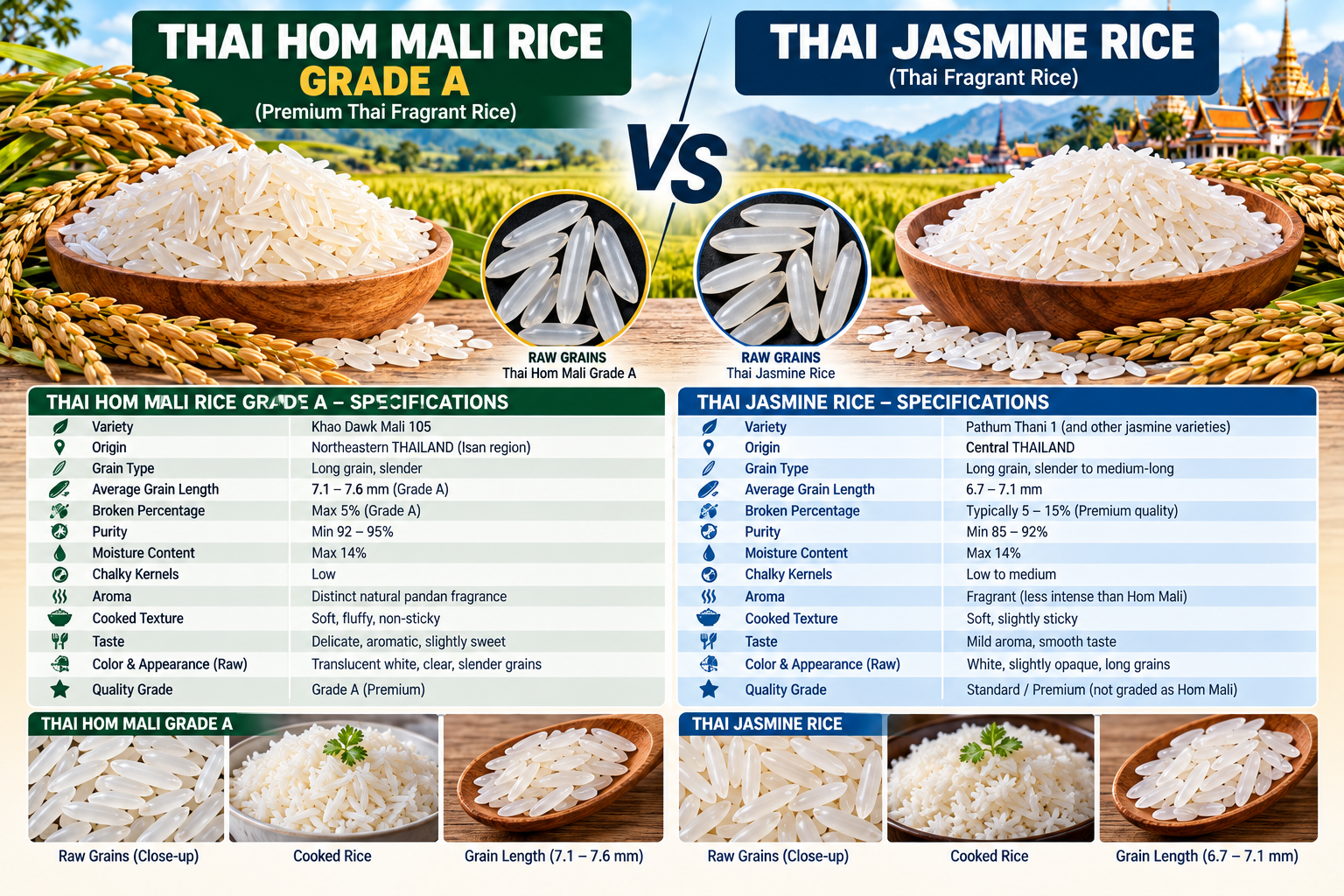
Thai Hom Mali and most traditional glutinous varieties are photoperiod-sensitive: they only flower when the days shorten after the rainy season. That limits them to one crop a year in the main season. Varieties such as Pathum Thani fragrant rice and most modern white rice varieties are not photoperiod-sensitive, so they can also be grown in the off-season.
This is why new crop Hom Mali reaches export markets from around the end of each year, while fragrant and white rice are harvested more than once.
How the harvest affects prices
Harvest timing is one of several forces behind Thai rice prices. When a large main crop is harvested in November and December, farmgate paddy prices often come under pressure; USDA reported that the large 2025/26 main-crop harvest in November and December 2025 depressed paddy prices. Export prices then also depend on the Thai baht exchange rate, demand from major importing countries, competition from India and Vietnam, and freight rates.
Weather and water also matter. Drought can reduce off-season planting in the central plains, while floods can delay it, as happened in the 2025/26 season.
How to plan your rice purchases
- For new crop Hom Mali, plan orders from around December, when the new harvest is milled and available.
- For white and parboiled rice, supply is available year-round from both crops and from storage.
- Always specify the crop year in your quotation and contract, especially for fragrant rice.
- For regular volumes, consider a supply contract with scheduled shipments to spread price risk across the year.
- Watch the market: USDA Foreign Agricultural Service reports and Thai Rice Exporters Association updates are useful public sources.
Frequently asked questions
When is the rice harvest in Thailand?
The main harvest is from about November to December, with some regions starting in October. The irrigated off-season crop is harvested from about February to April.
When is new crop Thai Hom Mali available?
Hom Mali is harvested in November and December, so new crop rice usually becomes available for export from around December onward.
Is Thai rice available all year?
Yes. Milled rice from each harvest is stored and exported throughout the year, and white rice is harvested in both the main and off-season crops.
Sources and further reading
- USDA Foreign Agricultural Service: Thailand Grain and Feed reports (2025 and 2026)
- FAO/GIEWS country briefs on Thailand
- Ministry of Agriculture and Cooperatives, Thailand: crop monitoring reports
This guide is for general information. Regulations and market conditions change, so confirm current requirements with the relevant authorities and your advisers.
Sourcing rice from Thailand?
Tell us what rice you need, the quantity required, and your destination. Our export team will respond with the relevant information and quotation.