Key takeaways
- The broken percentage is the maximum share of broken kernels allowed in a lot.
- Thai white rice is graded from 100% (grades A, B and C) through 5%, 10%, 15% and 25% broken.
- A1 Super is a 100% broken grade, produced from milling 100%, 5% and 10% white rice.
- Lower broken content means a cleaner look and a higher price; higher broken content suits price-sensitive markets and processing.
- Broken percentage is only one quality factor: moisture, chalky and damaged kernels, and milling degree also matter.
What does '5% broken' mean?
When rice is milled, some kernels break. After milling, rice is sorted and sold by how many broken pieces it contains. "White rice 5%" means the lot may contain no more than 5% broken kernels; the rest are whole kernels or head rice. The lower the broken content, the cleaner the rice looks in the pack and the higher the price.
How Thailand grades white rice
Thailand's Ministry of Commerce publishes official export standards for rice. For Thai white rice, the grades run from 100% (grades A, B and C), which is almost entirely whole grain, through 5%, 10%, 15% and 25% broken, each allowing progressively more broken kernels and slightly more of other defects. Each grade also sets limits for whole kernels, chalky kernels, damaged kernels, red and undermilled kernels, and the milling degree.
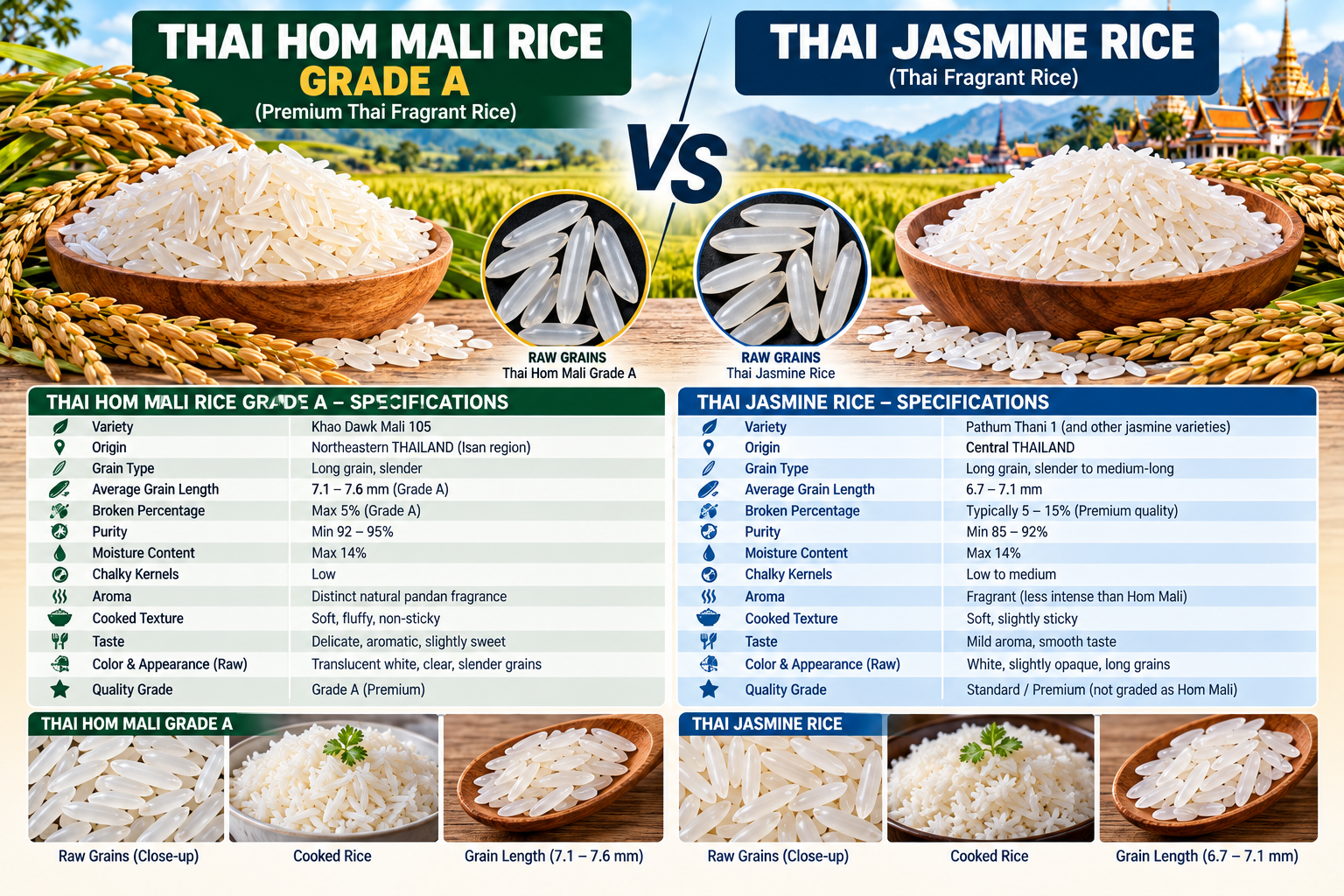
Thai Hom Mali rice has its own standard with four white rice grades: 100%, 5%, 10% and 15%.
What is A1 Super broken rice?
A1 Super is a grade of 100% broken rice. Under the Thai standard, white broken rice A1 Super is obtained from milling white rice 100%, 5% and 10%, and may contain only a small share of whole kernels and very small broken pieces. A1 Extra Super is a related broken grade produced from milling 100% white rice.
Broken rice has the same nutrition as whole rice but costs less, so it is widely used by food manufacturers. It is milled into gluten-free rice flour for noodles, bakery and baby food, used by breweries as an adjunct alongside barley malt, and used in animal and pet feed.
Common grades and typical uses
| Grade | Broken content | Typical buyers |
|---|---|---|
| White rice 100% (A, B, C) | Almost all whole grain | Premium retail |
| White rice 5% | Max. 5% broken | Supermarkets, quality wholesale |
| White rice 10% and 15% | Max. 10% or 15% broken | Distributors, mixed markets |
| White rice 25% | Max. 25% broken | Price-sensitive markets, tenders |
| A1 Super | 100% broken | Flour, noodles, brewing, feed |
Grade names follow Thailand's rice standards; exact limits are confirmed in each quotation.
Other quality factors to specify
Two lots with the same broken percentage can still differ. A complete rice specification also covers:
- Moisture: usually 14% maximum for export, to protect the rice during storage and shipping.
- Chalky kernels: opaque grains that look less attractive and break more easily.
- Damaged, yellow and red kernels: limited by grade.
- Milling degree: how much bran has been removed, from extra well milled to reasonably well milled.
- Colour sorting: "sortexed" rice has been cleaned by optical sorting machines.
- Grain length and crop year.
How to choose the right grade
Match the grade to your customers. Supermarkets and premium wholesalers usually want 5% broken or better. Distributors serving mixed markets often choose 10% or 15%. Price-sensitive markets and large tenders commonly use 25% broken. Food manufacturers, breweries and feed producers buy 100% broken grades such as A1 Super. See our long grain white rice and A1 Super broken rice pages for typical specifications.
Writing the grade into your contract
Always state the grade using the exporter's standard name (for example "Thai long grain white rice 5% broken, sortexed, new crop") and list the key limits: broken kernels, moisture and any other factor that matters to you. Then appoint an independent surveyor to check the lot against those limits before loading.
Frequently asked questions
Is 25% broken rice bad quality?
No. It is a lower-priced grade with more broken kernels, not unsafe or inferior food. It is widely used in price-sensitive markets and institutional supply.
What is the difference between A1 Super and A1 Extra Super?
Both are 100% broken rice grades under the Thai standard. A1 Extra Super is produced from milling 100% white rice, while A1 Super is produced from milling 100%, 5% and 10% white rice, with slightly different limits on whole kernels and small brokens.
What moisture level should export rice have?
Export rice is usually specified at 14% moisture maximum, which helps protect it from mould and quality loss during storage and ocean transit.
Sources and further reading
- Ministry of Commerce, Thailand: export standards for Thai white rice, Thai Hom Mali rice and Thai fragrant rice
- Research literature on rice as a brewing adjunct and on broken rice utilisation
This guide is for general information. Regulations and market conditions change, so confirm current requirements with the relevant authorities and your advisers.
Sourcing rice from Thailand?
Tell us what rice you need, the quantity required, and your destination. Our export team will respond with the relevant information and quotation.